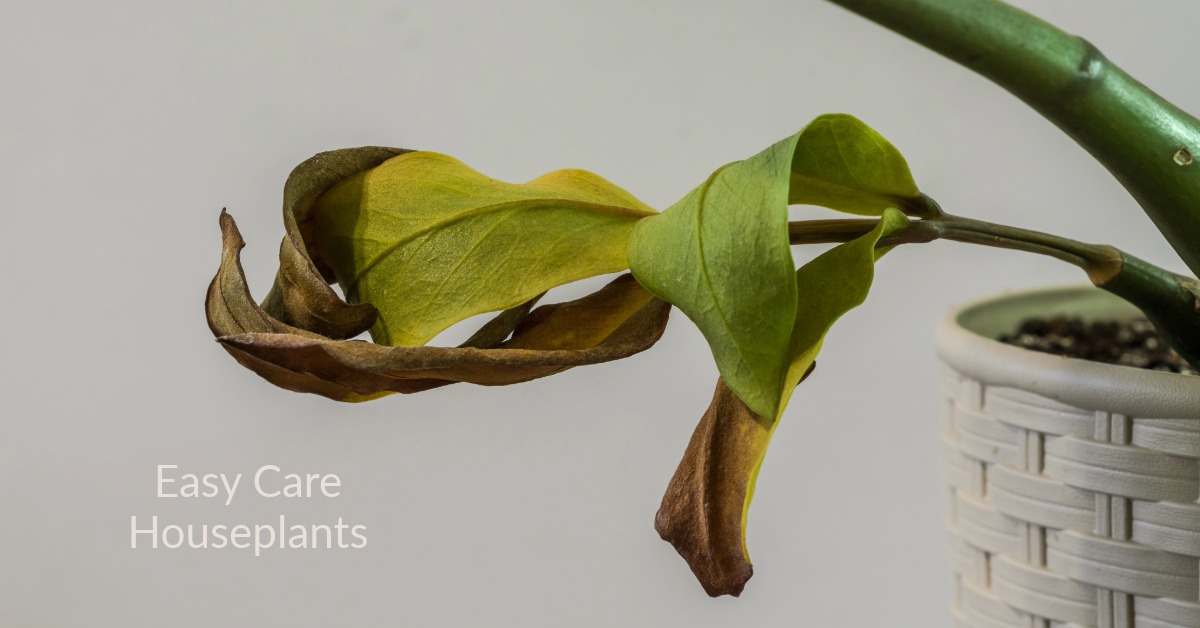
Few things are more frustrating than seeing the leaves of an otherwise healthy houseplant begin to curl. Maybe the edges curl inward, the leaves fold downward, or new growth emerges twisted and curled. While curling leaves can be alarming, they are often your plant’s way of telling you that something about its growing conditions needs attention. Once you identify the cause, you can often correct houseplant leaves curling with a few simple changes to your plant’s care routine.
Why Do Houseplant Leaves Curl?
Houseplant leaves can curl for several reasons, including underwatering, overwatering, temperature stress, low humidity, inadequate light, pests, and fertilizer problems. The tricky part is that several of these issues can produce similar symptoms.
Pay attention to when the curling occurs, where it appears on the plant, and what the leaves look like beyond the curling. These clues can help you determine what your plant needs.
1. Your Plant May Need More Water
One of the most common causes of houseplant leaves curling is underwatering. When a plant doesn’t receive enough water, it has trouble maintaining the pressure inside its cells. As a result, leaves may curl, droop, or develop dry brown edges.
Check the soil before reaching for the watering can. If the soil is extremely dry several inches below the surface, your plant may simply be thirsty.
Instead of watering on a schedule, check your plant’s soil regularly. Lots of factors can affect how quickly soil dries out, and checking the soil is the best way to determine when to water.
2. You May Be Overwatering
Overwatering can also cause curling leaves. When soil remains consistently wet, plant roots may not receive enough oxygen. Prolonged overwatering can eventually damage the roots. Damaged roots may struggle to absorb water and nutrients properly.
Overwatered plants may have leaves that curl, droop, yellow, or become soft. The soil may also remain wet for an unusually long time. If you suspect overwatering, check the soil and roots. Make sure your plant is growing in a container with drainage holes and that excess water can escape freely.
3. Humidity May Be Too Low
Many popular houseplants are native to tropical or subtropical environments where humidity is considerably higher than it is in many homes. When indoor air becomes especially dry, leaves may curl inward to reduce moisture loss. You may also notice brown or crispy leaf edges. Low humidity can be particularly problematic during winter when indoor heating dries out the air.
Depending on the plant, increasing humidity may help. Grouping plants together, using a humidifier, or moving particularly humidity-loving plants away from dry heat sources can make a difference.
4. Your Plant is Getting Too Much Light
Plants need light to photosynthesize, but more light isn’t always better. If a houseplant receives intense direct sunlight, especially through a hot window, its leaves may curl in response to heat and moisture loss. You might also notice faded patches, brown spots, or scorched areas.
If sun damage accompanies curling leaves, move the plant farther from the window or provide filtered light. Remember that bright indirect light doesn’t mean placing a plant directly in harsh afternoon sunshine. The ideal location depends on the specific plant.
5. Your Plant Isn’t Getting Enough Light
This should come as no surprise, but insufficient light can also contribute to unhealthy leaves. When a plant doesn’t receive enough light, its growth may become weak and stretched. New leaves may be smaller, and the plant may look less vigorous overall.
While low light doesn’t always directly cause houseplant leaves curling, it can contribute to overall plant stress. If your plant is also becoming leggy or producing unusually small leaves, consider whether it’s getting enough light.
6. Temperature Changes Can Stress Your Plant
Houseplants generally prefer relatively stable temperatures. Sudden temperature changes can cause stress that shows up in the leaves. A plant that sits directly beside a heat vent, for example, may be exposed to hot, dry air that causes its leaves to curl. The same can happen if the houseplant is close to an exterior door or near a drafty window.
7. Don’t Count Out Pests
Some pests feed directly on plant tissue and can cause distorted or curled leaves. Spider mites, aphids, thrips, and other sap-sucking insects can all cause visible damage. Look closely at both sides of the leaves, along stems, and around new growth. Some pests are tiny and easy to overlook. If you find pests, isolate the affected plant from your other houseplants while you address the infestation.
8. Too Much Fertilizer Can Be Counterproductive
Fertilizer provides essential nutrients, but using too much can cause problems. Excess fertilizer can build up salts in the soil, which can interfere with the plant’s ability to take up water. Curling leaves, brown edges, and a white crust on the soil can sometimes indicate fertilizer buildup.
Always follow the fertilizer’s instructions, and don’t assume more fertilizer will make your plant grow faster. It probably won’t. If you think fertilizer buildup is affecting your plant, flushing the soil thoroughly with water may help remove excess soluble salts, as long as the plant’s container has adequate drainage.
9. Root Problems May Be Affecting the Leaves
Healthy roots are essential for healthy leaves. If overwatering, poor drainage, disease, or compacted soil has damaged the roots, the plant may struggle to absorb the water and nutrients it needs.
If the problem persists despite correcting the plant’s basic care, gently remove the plant from its container and inspect the roots to see what’s happening. Healthy roots generally look firm and the right color for the plant. Mushy or deteriorating roots may indicate root rot.
Why Are New Houseplant Leaves Curling?
Curling new growth can be especially concerning. New leaves are naturally more delicate than mature leaves, and some plants emerge with leaves that are temporarily curled before unfurling.
If the leaves remain distorted after they’ve matured, something may be stressing the plant. Pests are one possibility, particularly if the newest growth looks twisted, puckered, or unusually small. Environmental stress, inconsistent watering, inadequate light, and nutrient problems can also affect new growth. Inspect new leaves carefully and compare them with older, healthy growth.
Can Curled Leaves Uncurl?
Sometimes! If curling was caused by temporary environmental stress and the leaf tissue hasn’t been permanently damaged, the leaf may gradually return to a more normal shape after conditions improve.
Unfortunately, leaves that have already suffered severe dehydration, scorching, pest damage, or tissue damage may not completely recover. Don’t be discouraged if an older leaf remains curled. The most important thing is to look for healthy new growth. New leaves that emerge normally are a good indication that your plant’s growing conditions are improving.
Keep an Eye on Your Plant
Houseplant leaves curling aren’t necessarily a sign that your plant is dying. In many cases, they’re simply a clue that something in the plant’s environment isn’t quite right. Instead of watering or fertilizing right away, take a moment to investigate. Check the soil, examine the leaves for pests, consider the lighting and temperature, and think about whether the plant’s humidity needs are being met.
With a little detective work, you can usually narrow down the cause and give your houseplant what it needs to start producing healthy, beautiful leaves again.