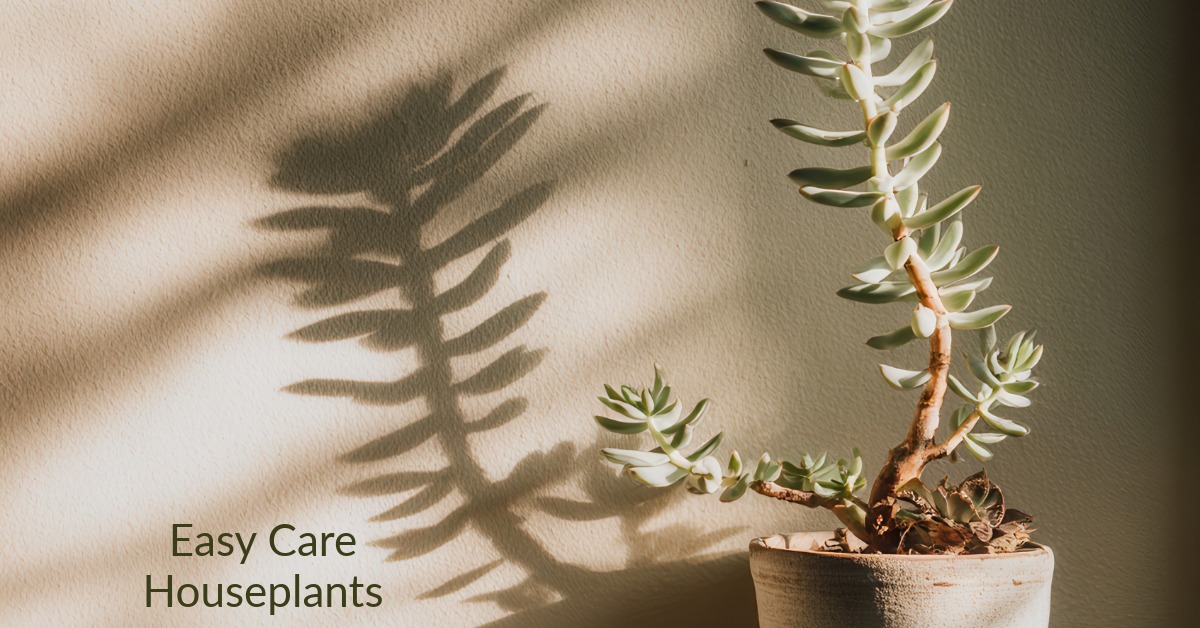
If you’ve noticed your houseplant growing tall, thin stems with fewer leaves than usual, you might be dealing with what’s known as a leggy plant. “Leggy” is a common term among plant people, and it’s a sign that your plant isn’t growing as compact or healthy as it should. What exactly causes legginess, and how can you fix it?
Understanding Legginess
A leggy plant has long, stretched-out stems with sparse foliage. Instead of growing dense and full, the plant becomes tall and spindly. You may also notice that the leaves are smaller or spaced farther apart than usual.
This change in growth happens because the plant is reaching for light. When a plant doesn’t get enough light, it stretches in the direction of sunlight in an attempt to capture more energy for photosynthesis. A plant will essentially starve without enough light, and it will expend its limited energy to get more sunlight and survive. These efforts often result in leggy growth.
Common Causes of Leggy Growth
There are lots of reasons why a plant will become leggy, but insufficient light is the main culprit. Here are the most common reasons your plant might look lanky or uneven:
Low Light Conditions
When plants don’t receive enough light, they grow taller in search of it, producing elongated stems and fewer leaves.
Improper Light Direction
If light comes from only one side, like a nearby window, plants will lean and stretch toward that light source.
Overcrowding
When plants are too close together, they compete for light and space, leading to uneven, leggy growth. Ultimately, plants that are unable to compete may die if neighboring plants overtake them due to a lack of light.
Improper Pruning
Skipping regular pruning allows the plant to focus energy on vertical growth rather than developing new, bushy branches.
Seasonal Changes
During winter, shorter days and weaker sunlight often lead to leggier growth.

How to Fix a Leggy Plant
While a leggy plant is unsightly, don’t worry, because you can often correct or at least improve legginess with a few care adjustments. Fixing a leggy plant takes time, so identify the cause and the solution, and be patient.
Increase Light Exposure
Move your houseplant to a brighter location where it can receive adequate sunlight. Confirm the type of light your houseplant needs, and then move it to a spot that provides sufficient light. Consider relocating houseplants to sunnier spots during the winter. A plant that may thrive in a north or west-facing window or on the opposite side of the room from windows during the summer, may need to live closer to a south- or east-facing window during the winter.
Don’t try to overcorrect, because too much light will do more harm than good. Even a modest boost in brightness can make a big difference.
Rotate Your Plant Regularly
Turning or rotating the container every week or whenever you water the plant helps the plant grow evenly. Each side gets a turn in the sunlight, so it never has to compensate for limited light on one side. This technique also prevents the plant from leaning or stretching toward one direction.
Use Grow Lights if Needed
If sunlight is limited, supplement with LED grow lights to provide consistent lighting. A grow light will provide the necessary light, allowing your plant to thrive and live where you want it to, within your home, not where it has to be.
Prune to Encourage New Growth
Trim back overgrown stems using clean scissors or pruning shears. Trimming a plant and making it smaller may seem counterintuitive if you want the plant to grow bigger, but it actually works. Cutting above a leaf node encourages branching and a fuller appearance.
Check Your Fertilizing Routine
Too much fertilizer, especially nitrogen-heavy ones, can promote excessive, weak growth. Apply a balanced plant food when the plant is actively growing and reduce feeding in fall and winter. A balanced plant food encourages balanced growth, resulting in a large, lush plant.
Preventing Leggy Growth
The best way to prevent legginess is to give your plants the right light from the start. Observe how your houseplants respond to their environment and adjust placement as needed. Compact, healthy growth is a sign that your lighting and care routine are on track.