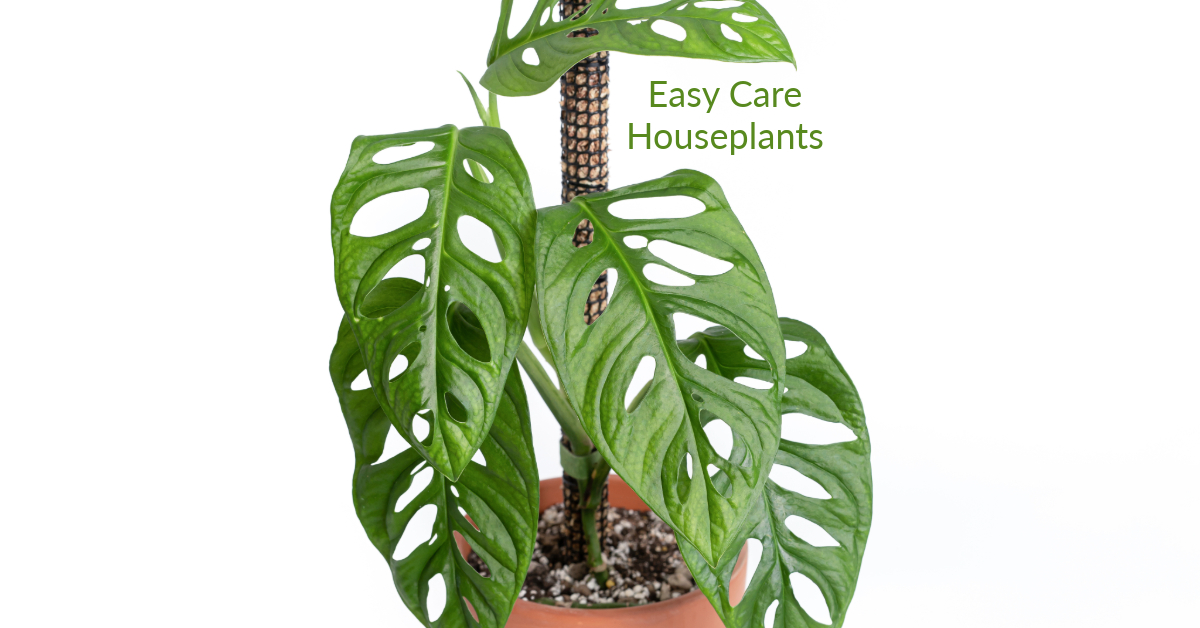
You’ve probably seen an established plant climbing a trellis or moss pole and had a pang of plant envy. Training a plant to climb a trellis is easy, but it takes time. Follow these steps to train a houseplant to climb a trellis.
Why Trellis a Houseplant
Training a plant to climb a support is largely a matter of preference. You need to decide what look you want and what works best in your space. Lush, hanging vines are stunning, but sometimes getting everything up and contained is best.
Maybe you don’t have a spot up high, allowing the vines to cascade. A trellis enables the vines to grow upward, ensuring the foliage receives plenty of sunlight and doesn’t drag on the floor. A plant on a trellis is also a nice alternative to a floor plant. A curtain of foliage may entice a curious cat, while the support of a moss pole or trellis provides stability and may be enough to encourage your feline to mind its own business.
Choose the Right Houseplant
You also need the right plant. Many plants climb in nature, so a trellis allows them to get back to basics in a sense. All vining plants can live on a trellis, but some are better climbers than others. Most Monstera and Philodendron varieties have substantial aerial roots that effortlessly latch on, while Pothos cultivars might need assistance because their aerial roots may not be long enough. Some vining houseplants take more effort or help than others to get the hang of a trellis.
The type of trellis also matters, so choose wisely.

Place the Trellis
It may be tempting to insert a trellis into a pot with a plant already growing, but don’t. The spike part of the trellis that goes into the potting soil may damage roots. Fill the pot with soil, place the trellis, then plant the houseplant.
Head Start
Set yourself up for success by working with a small plant. Training a young plant to grow on a trellis is easy because you can prod and nudge the vines in the right direction from the beginning. The plant will begin to grow along the support with time. Depending on the variety, aerial roots may latch onto the support. Starting with a young plant is the easiest and most surefire way to achieve success.
Additional Support
If you have a mature plant with long vines, you still have options. You can take cuttings, propagate those cuttings, and start with young plants. Another option is to gently weave the vines onto the trellis. Wrapping the trellis with vines can be tricky if the vines are particularly long. Be patient and take your time.
Loosely secure the vines using trellis clips, ties, or bands. There are a lot of varieties available, but select something that gently secures the stem to the trellis without digging into the vine. Avoid tightly binding the vines to a support, which can damage or even kill the vines. Clips or bands are useful when training a young plant and necessary if you attempt to trellis a mature plant. Remove the clips or bands when the plant has latched on and the additional supports are no longer necessary. You may need to continue to secure new growth to encourage it to grow along the support.
Get Growing
All houseplants need proper care, but dial in your care when you are beginning to train a houseplant to climb on a trellis. Position the plant in a spot that gets the correct amount of sunlight. Water when necessary and use fertilizer if enough time has passed since the last feeding. Proper houseplant care will help the plant settle in and reinvigorate growth, resulting in a happy and healthy plant that will thrive on a trellis.