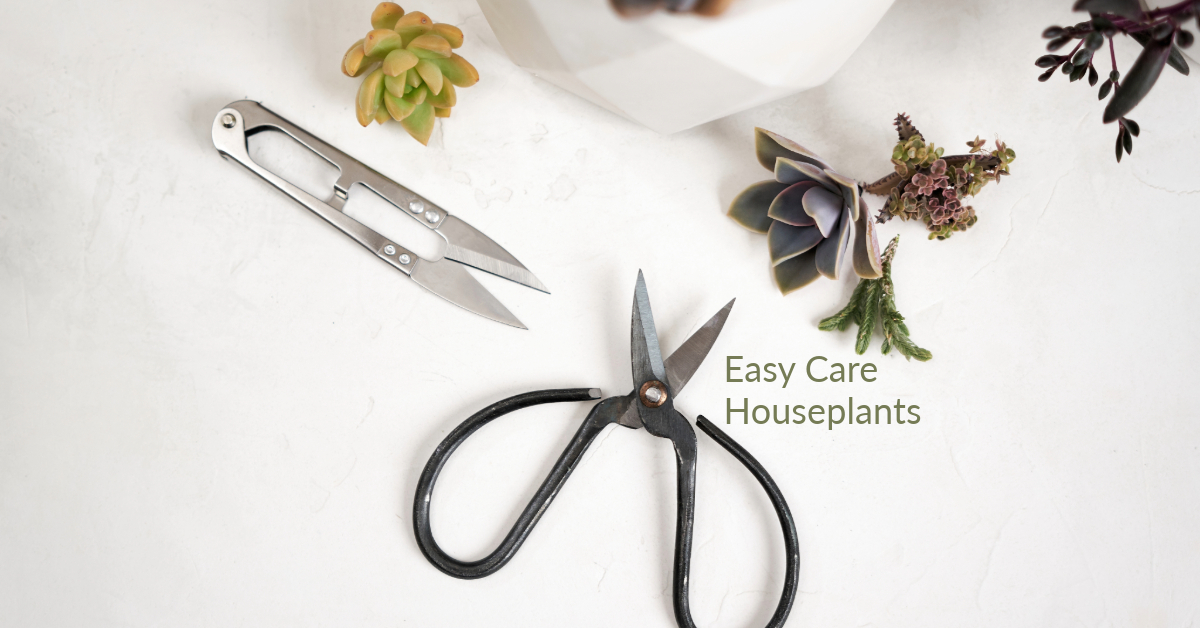
Pruners or pruning shears are incredibly useful for plant owners. Removing damaged growth or taking a cutting to propagate is so much easier when you have the proper tool. Knowing what kind of pruning shears you need isn’t always straightforward. Shears come in handheld varieties or larger versions, known as lopping shears. The trimming mechanisms are often the same; however, this article will focus on handheld trimmers, particularly those that are best for houseplants. Find out everything you need to know about pruners, so you can select the right pair for your needs.
Straight Blade Pruners
Dual-needlenose blades are straight and thin, resembling a bird’s beak, which is why this style is sometimes known as parrot-beak pruners. The blades are often delicate, so be careful and avoid thick branches.
Best Uses for Parrot-Beak Pruning Shears
Straight-blade pruning shears are better suited for indoor use on houseplants. The blades fit into compact spaces, often where bulky pruners cannot reach. Use straight blade shears to trim flowers, remove leaves, or sever thin stems.
Bypass Pruning Shears
Perhaps the most popular are bypass pruners. These are what most people probably envision when they think of handheld shears. Bypass pruning shears have two curved blades. The blades “bypass” each other, inspiring the name. Bypass pruning shears make clean cuts and are easy to use.
Intended Purpose
Use bypass pruners on thin stems. These shears are great for small shrubs and trees (as long as the branches are green). Bypass pruners are most useful outside, but you can use them indoors on large houseplants, like a FLF or Money Tree.

Anvil Pruning Shears
Anvil pruners have a straight blade that slides against a flat, dull piece of metal, known as an anvil. The dull side acts like a chopping block, allowing the sharp blade to slice. Anvil pruning shears are not very exact, but they offer excellent cutting ability, especially when trimming woody stems or branches.
Not Ideal for Houseplants
Anvil pruners are great for cutting through the woody stems of a shrub, but keep them away from most houseplants. The design, while great for slicing through a hard substrate, will crush or bruise delicate or green growth instead of cutting through it.
Ratchet Pruners
Most pruners are named after the type of blades they use. Ratchet pruning shears are named for a mechanism in the handle that enables cutting in stages. This design makes it easier to cut through thick stems. Ratchet pruners are also great for plant owners who may have limited grip strength or conditions like arthritis. It’s worth noting that ratchet pruners can have bypass or anvil cutting mechanisms. If you think ratchet cutters are a good option for you, also consider the blade type.
It’s essential to clean and maintain pruning shears regardless of the type, but ratchet pruners will last longer and perform better if you routinely spray lubricant on the ratchet mechanism to keep everything properly functioning.
Final Verdict
The type of plants you intend to trim determines the ideal kind of pruners to use. Straight-blade or parrot-beak pruners are often the best choice if you need to trim houseplants. Although consider using bypass pruners if you have tree-like plants with thick stems or branches. Whatever style of pruning shears you choose, keep them clean and in top working order so they provide the best cuts possible.