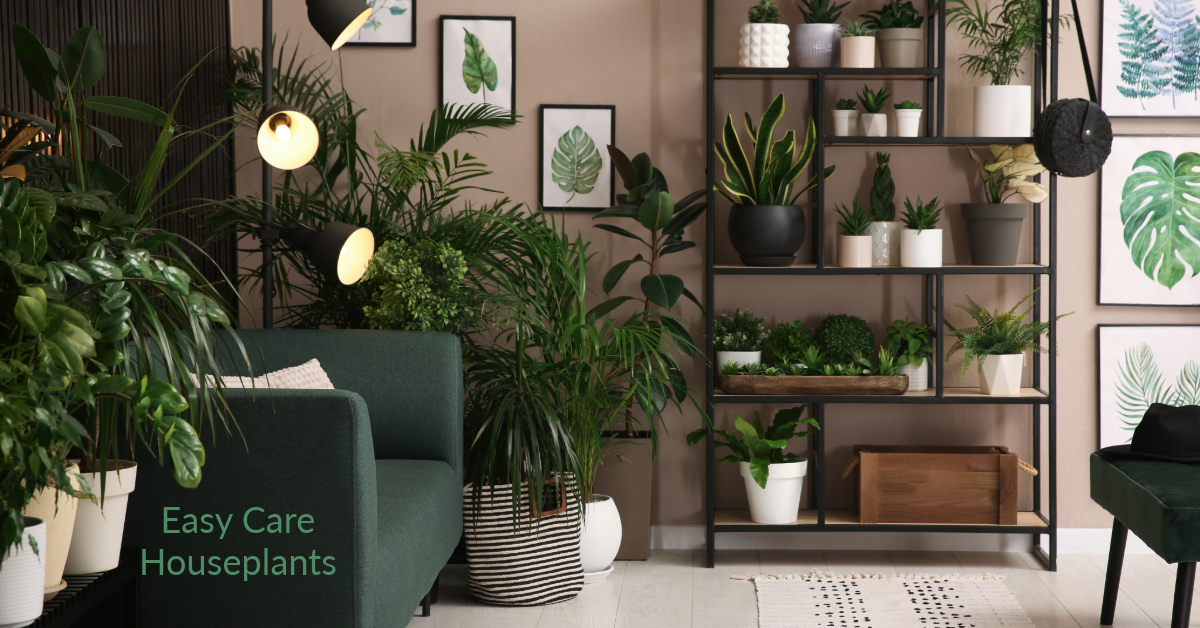
Plants transform a space. Featuring plants in your home introduces texture, vitality, and pops of color. Purposefully placing plants elevates the look and style, making a home feel welcoming and comfortable. There’s a certain skill to styling a space with houseplants. Learn the fundamentals of plant design so you can style your space like a professional.
Select the Right Houseplants
Start with a plant that will thrive in the space. Consider the amount of sunlight and humidity. Sun-craving plants will fail in a room with northern exposure. Plants that need dampness in the air cannot handle an excessively dry environment. Choose wisely to set your plants up for success by matching their needs to the room’s conditions.
You can use grow lights or a humidifier to make a less-than-ideal spot the perfect home or to account for seasonal changes. Consider your level of commitment and what you want for the overall space.
Go Verticle
Tall plants are great for filling a random corner or a space that feels unbalanced. A corner or oversized landing that’s too small for furniture and doesn’t need a floor lamp may be the perfect location for a Fiddle Leaf Fig or a Bird of Paradise. A tall plant with a narrow form can turn a weird, empty area into a focal point.
Large houseplants are an investment and can be expensive. If you don’t want to make a sizable purchase or if you don’t already happen to have a massive houseplant lying around, get a mid-sized plant and a plant stand. A Sansevieria laurentii paired with a plant stand raises the foliage and creates the illusion of a large plant without actually being a mammoth houseplant.

Use Plant Design to Ease the Transition
Open floorplan homes can present design challenges, and it’s often beneficial to define different spaces to create a flow and purpose. Utilize plant design to help you define areas. Position a floor plant where the dining space transitions into a living area. Situate plants on a window ledge where the entryway opens to a family room. The leafy greenery blends the edges and eases the transition.
Houseplants can also help give purpose to weird or outdated spaces. Trends come and go, and sometimes, when older homes are lived in or renovated, you end up with an odd ledge or a pony wall. These features may not work for you, but you may be stuck with them. Placing houseplants on or around a partial wall somewhat obscures the feature while making it look more purposeful. A vining Hoya can make a random ledge appear intentional.
Perfectly Imperfect Plant Design
Perfectly styled knickknacks and artfully draped throws look amazing, but the natural imperfections of houseplants keep the vibe grounded. Crispy leaf edges or a Pothos with a bunch of short vines but one long, reaching vine is part of what having houseplants is all about. The irregularities of houseplants mix things up and introduce a perfectly imperfect look that makes a space feel natural and lived in.