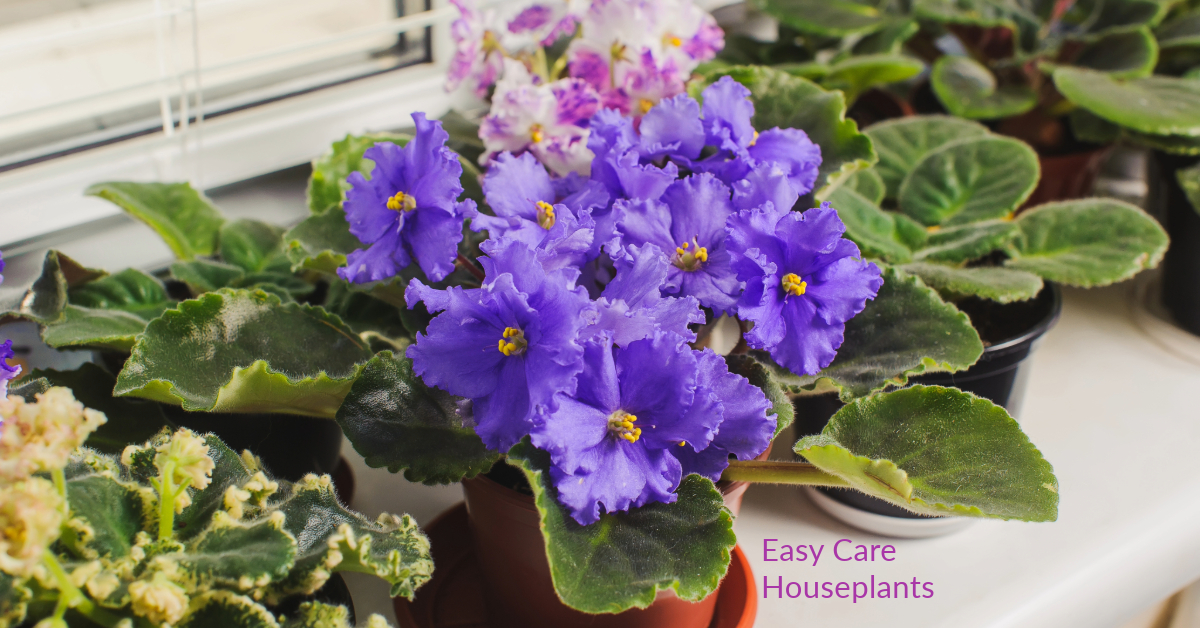
African violets have spectacular foliage, but the flowers often steal the show. These easy-care houseplants were popular in the late 1930s and only began to lose prominence in the past few decades. Learn how to get your African Violet to bloom and keep blooming all year.
Flower Requirements
African violets typically bloom after reaching one year of age. A healthy plant in ideal conditions may bloom sooner, but young plants often need about a year to grow flowers. Flowers bloom in clusters of six to eight, and the blooms usually last several weeks. The upper petals are sometimes a few shades darker in color. A plant can have several flower clusters growing and blooming at once.

African Violet Bloom Cycle
Some plants need a dormancy period to rest and recoup from the last growing season while preparing for the next growing season. African Violets are not like this and do not need a dormancy period. A healthy plant will continue to push out new flower clusters and can continually bloom for most, if not all, of the year. It is normal for African Violets to have flowers for ten months out of the year. Deadhead, or prune flowers when they fade, to encourage the plant to rebloom.
How to Care for African Violet
Well-balanced care is necessary to grow a healthy and lush African Violet. These tropical plants have a reputation for being fussy, but they are actually very easy when you give them what they need. African Violet care should mimic what the plant would experience in nature, and when you get all of the elements just right, these beauties bloom. Light, water, and fertilizer are the major components of getting an African Violet to bloom.
Light Requirements for African Violet
Lack of sunlight is the most common reason African Violets fail to bloom. These velvet-leaved houseplants need bright, indirect sunlight. Anything less, and the plant will have few, if any, flowers. Direct sunlight will burn the foliage, so find a hospitable spot. Near an east- or south-facing window can be a good location, but hang some sheer curtains to diffuse direct sunlight.
Too much of a good thing isn’t so great, and while African Violets need high levels of sunlight, they also need darkness. It’s more about quality than quantity when it comes to light. Make sure these plants get a solid eight hours of darkness. Increased sunlight is necessary for the plant to produce a hormone that causes flowers to develop, but that hormone can only work if the violet experiences darkness.

African Violet Water Needs
A specialized pot intended for African Violets greatly simplifies watering. These plants can thrive and bloom without a specialized pot, but it’s a lot of work — African Violets like consistent moisture. The plants dry out and can die when the potting mix is too dry, and they can quickly succumb to root rot when the soil is too wet. A dual pot design in which the plant is essentially bottom-watered ensures the roots get just the right amount of moisture and the water-sensitive foliage is protected.
African Violet Fertilizer Tips
Houseplants have limited resources when it comes to nutrition. Whatever is in the soil or provided via fertilizer is all they have to work with, so your plants depend on you to give them a properly balanced diet. Rich potting mix with high organic content is ideal for African Violet care, and the soil must promote drainage. Routine doses of fertilizer further support growth and flowers, but the type of fertilizer matters.
A balanced fertilizer is alright but opt for a fertilizer with increased phosphorus or a product specially formulated for African Violets. Phosphorus is the middle number in the fertilizer ratio, so a product with a ratio like 8-14-9 or 15-20-15 is a good pick. Avoid a product high in nitrogen because nitrogen promotes foliage growth. A lot of nitrogen will force the plant to put all its energy into growing leaves, and you won’t get flowers. Low levels of nitrogen are enough to support healthy leaf growth.

Pro tip: Avoid fertilizers using urea as nitrogen when feeding African Violets. Urea can burn the roots and do more harm than good. Many fertilizers formulated for African Violets still use urea, so finding a product without it can be challenging. It’s not the worst case if you use a fertilizer with low urea levels, but try to avoid it if possible. Check the label on the packaging to confirm the nitrogen source.
Wait to Repot
Rootbound African Violets are more likely to bloom. A plant that fits snuggly in its pot will often bloom prolifically. Don’t be in a rush to repot, but don’t let the plant become too rootbound. The plant will need more space at a certain point, and it may fail to bloom if it cannot grow. Dying foliage, especially when the light and water care are correct, can be a sign of a severely rootbound plant.
African Violets are fast-growing plants when they receive proper care, and it may be necessary to repot annually. Give the plant a larger container, but don’t go too big. A new pot should be one to two inches larger; anything bigger can prevent blooms. A too big container forces the roots to grow to fill the available space at the expense of the leaves. The leaves will eventually catch up, but the plant will not bloom or will have minimal flowers in the meantime.
Offshoots or new plants that grow alongside the parent plant can also make for a crowded fit. Remove new plants when they are big enough to be separated and grow on their own to free up space in the container. Repotting is a great time to give the plant fresh, rich potting mix to encourage growth and flowers.

Enjoy African Violet Blooms
Light, water, and fertilizer all contribute to an African Violet blooming. If the light is perfect, but the water or fertilizer is off, the plant may not bloom. All the care needs to be spot on, but these three elements must be correct if you want your plant to flower. Learning to provide the ideal care and troubleshoot issues ensures your African Violet blooms, and you’ll enjoy this amazing and easy-care houseplant.