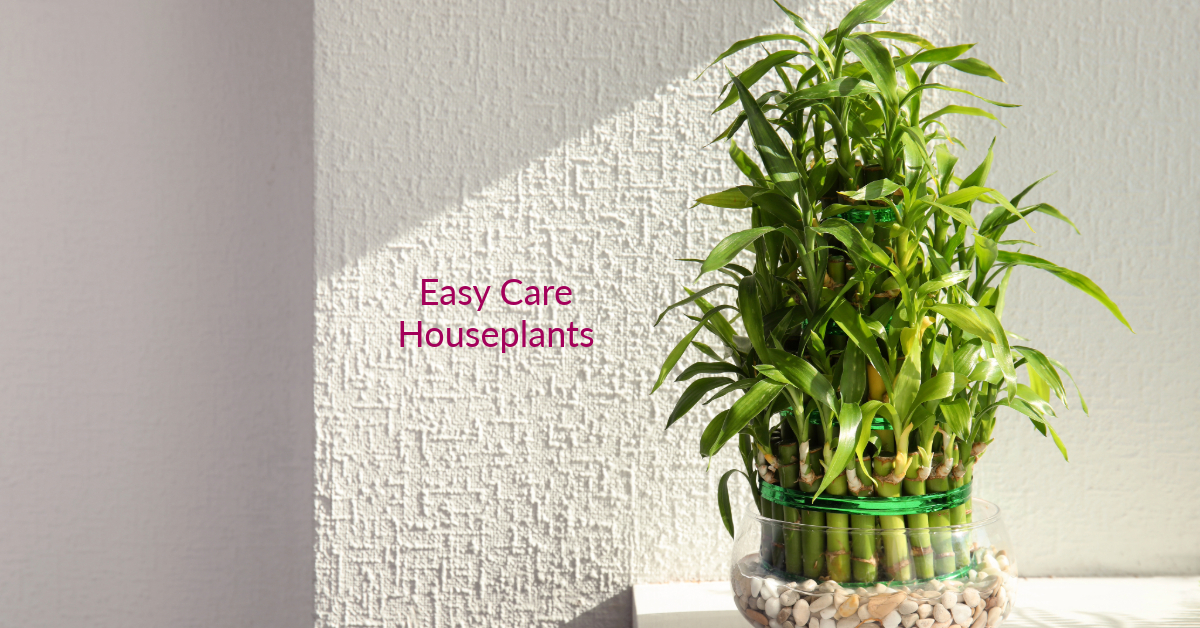
Lucky Bamboo takes easy-care houseplants to a new level. This Dracaena has unique, segmented canes and lush greenery. Lucky Bamboo is versatile and can live in potting mix or water. It’s common to see this plant artfully arranged in a shallow dish, but it can also have a more traditional look as a potted plant. Find out when to grow your Lucky Bamboo in water and when soil is the best choice.
What Are You Starting With?
Canes growing in water can switch to soil, but not the other way around. If you purchase a plant in soil, it’s best to continue to grow it in potting mix. Canes growing in water are essentially cuttings being propagated. Lucky Bamboo canes can live in water for a few years before they need to make the move to soil.
Water Growing Tips
If you repot your Lucky Bamboo in water, position the stalks in a container, fill the voids with pebbles or small stones, and top it off with water. The pebbles will hold the canes in place and keep them upright. Try to leave about one inch of space around each stalk. A low dish works well, but taller plants may need a vase with some height to support the canes.

Pro tip: Healthy Lucky Bamboo roots are rusty-red or white. Unhealthy roots are black.
When to Change the Water for Lucky Bamboo
Plants grown in water need one to two inches of water. The water should be deep enough to submerge the roots and not much more. The plant will soak up moisture, and some will evaporate, so top the water off as the level drops. Empty the water and give the Lucky Bamboo fresh water monthly. You can change out the water more frequently if you notice an odor or another issue.
Hard water, or water with a high mineral content, can cause calcium deposits to form on the canes. If tap water is causing a problem, use filtered, distilled, or purified water.
How to Find the Right Lucky Bamboo Container
Clear glass vessels can allow algae growth. If you notice slimy green algae, clean the container and pebbles using dish soap. Rinse the plant and roots. If you like the look of the clear glass container, plan on routinely cleaning it, or switch to something opaque that will not let sunlight come into direct contact with the water.

Why is My Lucky Bamboo Mushy?
Black, mushy stalks are disappointing, but they can happen. Poor-quality water, fungus, or bacteria are the most likely culprits. The first thing to do is remove the stalks from the water. Inspect all the stalks. Any that appear healthy can be placed in a container with fresh, clean water. Use a clean, sharp knife or pruning shears to remove any damage. Make a cut on a healthy part of the plant and completely remove the unhealthy section.
Thoroughly clean the existing container and any pebbles. You can start over with the freshly trimmed stalks. Continue to monitor the plants for signs of decay. If the damage reoccurs, you can repeat the process or consider trashing an unhealthy plant.
Lucky Bamboo Long-Term Plan
Canes grown in water are short-lived and eventually need to move to soil. Lucky Bamboo can only survive in water for a few years. Canes with several sets of leaves are ready to move to potting soil. Pick out a container and use moist soil that promotes drainage. Most ready-made houseplant mixes work well. Keep the soil damp for the first few weeks when transitioning a plant from water to soil. Moist soil helps ease the move. After the first few weeks pass, settle into a regular watering routine when the top few inches of soil are dry.