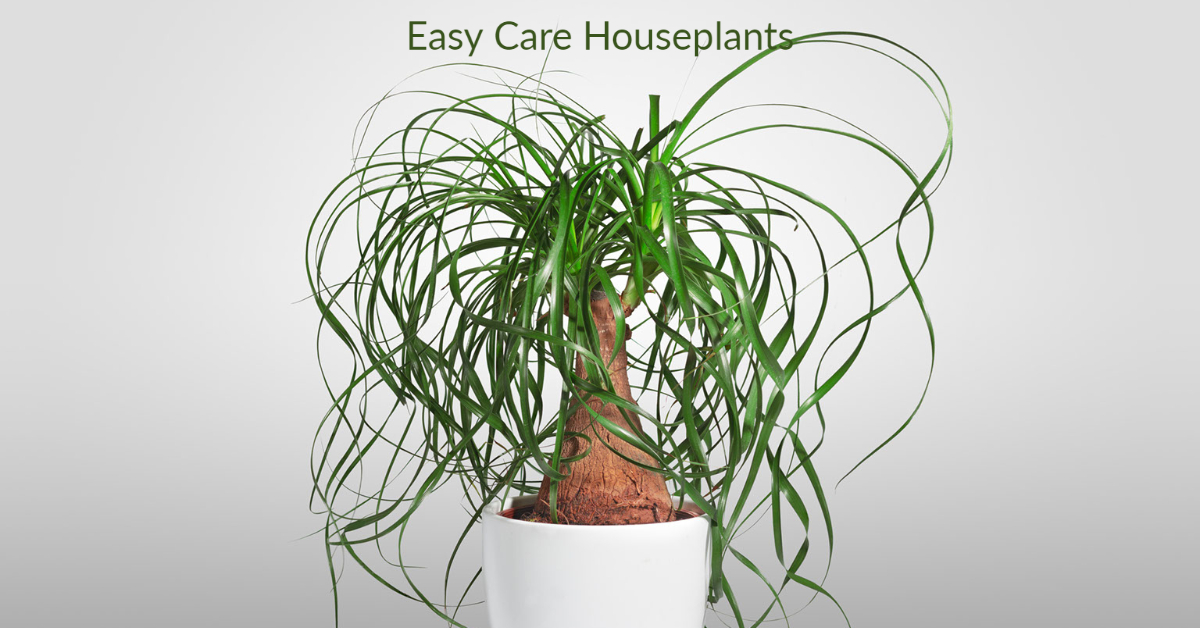
Ponytail Palms are long-lived darling houseplants, so you can enjoy their stout trunk and ribbon-like foliage for years to come. These undemanding plants, also known as elephant foot palm, are easy to maintain and look amazing with little care. Learn more about Ponytail Palm care and what these plants need to thrive.
More About Beaucarnea recurvata
Despite the name, Ponytail Palms are not true palms. This plant is a member of the Asparagaceae family, and its botanical name is Beaucarnea recurvata. Native to Mexico, Ponytail Palm plants thrive in semi-desert climates and grow as a perennial in zones 9 and 10. The trunk of the Ponytail Palm is very wide at the bottom and quickly tapers. The long, thin foliage grows in clusters at the top of the trunk. The green leaves arch and curl, giving the plant its leafy, good looks.
These plants reach 30 feet tall in nature but stand about 6 feet tall as houseplants. Under ideal conditions, Ponytail Palms can grow about one foot per year. Houseplants grow much slower because while the conditions inside are welcoming, they are not exactly what would be found in their native habitats. The slow-growing trait benefits indoor plants because the trees will not outgrow your space anytime soon.

Ponytail Palm Light Needs
Bright indirect light is best for Ponytail Palms. These plants like lots of sunlight, so find them a spot near a south-facing window. Direct light is harmful and can burn foliage. Hang sheer curtains or move the plant back from a sunny window if the light intensity is too much.
How Often to Water Ponytail Palms
These plants like dry conditions, so wait until the top couple of inches of soil is dry before watering. Drench the soil so the entire root ball is wet, and allow water to drain through the pot. Empty the cover pot or saucer of standing water so the roots do not absorb more moisture. Water Ponytail Palms less often in the winter when the plant is dormant. Wait until the soil is dry throughout before watering in the winter.
The plant will tell you if it is over- or under-watered. Brown leaf tips mean the plant is overwatered, so let the soil dry out more before watering. Drooping foliage means the plant is too dry and needs a drink.
Ponytail Palm Soil Needs
As desert natives, Ponytail Palm plants need well-drained soil. Most cactus or succulent mixes work well for these trees, but any mix high in perlite or sand will work well.

Temperature for Ponytail Palms
These plants like warm temperatures between 60° and 85° F. Ponytail Palms are not cold-hardy, but slightly cooler temperatures are okay in the winter when the plant is dormant. Ponytail Palms can stay on a porch or sunroom year-round if you live in an area with mild winters. If not, just move the plant outside for the summer and get it back indoors before the temperature drops. Temperatures below 55° F should be avoided.
Ponytail Palm Humidity Needs
Ponytail palm plants prefer average to low humidity. Anything around 40% is ideal. These plants can live in high humidity, although it is not necessary. Make sure the plant receives plenty of light if grown in a humid environment so the soil is as dry as possible.
Ponytail Palm Fertilizer
As natural desert-dwellers, Ponytail Palms have learned to thrive in challenging conditions without much help. These plants are not heavy feeders, but routine fertilization will keep them looking great and pushing out new growth. Feed Ponytail Palm plants using a food intended for cacti or succulents in the spring.

Does Ponytail Palm Bloom?
Ponytail palm trees bloom, but it is rare for houseplants to bloom. The long-lasting flowers are a creamy-white inflorescence and look similar to the flowers on ornamental grasses. The flowers are not what most plant owners want or expect of a blooming houseplant, so it’s not a big deal that houseplants do not bloom.
When to Repot Ponytail Palm
Repot Ponytail Palms every few years. Slightly rootbound plants stay at a manageable size. Eventually, the soil will be depleted, and the plant will need fresh potting mix. When it is time to repot, select a pot with drainage so soil and roots can dry out. Clay, like unglazed ceramic or terra cotta, are excellent pot material because they allow water in the soil to evaporate. Be careful when handling the plant to repot because the foliage is sharp along the edges.
Ponytail Palm Propagation
Ponytail Palm plants send out pups or offshoots. These tiny plants grow alongside the mother plant and can be removed when they are at least four inches tall. It’s often easier to remove the pup when repotting. Cut the root that connects the offshoot to the main plant. Repot the main plant right away, but let the cut end of the offshoot callous over for a few days. Plant the offshoot in a cactus or succulent mix and water when the top inch of soil is dry. Roots will form in a few weeks, at which time you can provide the same care as for a mature plant.

Is Ponytail Palm Pet Safe?
Ponytail Palm plants are pet-safe. The foliage is non-toxic, although the leaves have sharp edges, so chewing on the plant may cut or irritate your pet’s mouth. Your cat or dog will not become ill or sick after eating any part of a Ponytail Palm, but they may not enjoy the experience. Keep the plant away if you have a curious pet because the gently arching foliage can be intriguing, especially for a cat inclined to swat at dangling objects.
Ponytail Palm Styling Tips
The curling foliage of the Ponytail Palm makes houseplant styling simple. Just give this plant a decorative pot, put it in a sunny spot, and the leaves will take it from there. Small plants look lovely on a tabletop, while tall floor plants can add height and texture to a space. Feature a floor plant next to a console table or in a brightly lit corner.
Ponytail Palm Care Tips
The stately Ponytail Palm is a lovely houseplant that needs lots of sunlight and water on occasion. Caring for this leafy plant is easy, making it a wonderful houseplant for beginners or anyone looking to green up their space without a big commitment.