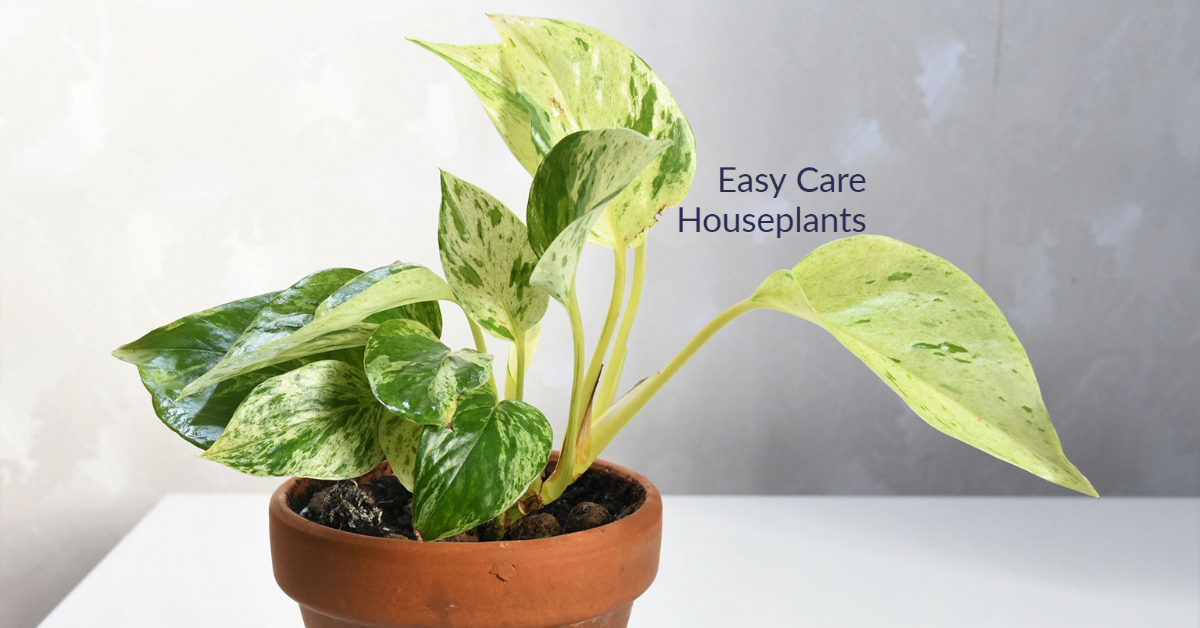
Pothos are synonymous with easy-care houseplants, and deservedly so. These vining plants are low-maintenance and adaptable. The Marble Queen Pothos is slightly more demanding, at least in terms of sunlight, than other cultivars, but ultimately this houseplant is very easy to grow. Formally known as Epipremnum aureum ‘Marble Queen,’ this plant is a member of the Araceae or Arum family, which is often referred to as Aroids. Here is what you need to know about caring for this stately beauty.
Royal Roots
The Marble Queen has the same vining growth habit that Pothos are known for, plus some spectacular variegation. The heart-shaped leaves are a mix of cream and green. The foliage features flecks of dark green that stand out against a creamy light green. The Marble Queen will likely have at least a few leaves that are half solid green and variegated on the other half.
The Marble Queen is easy to confuse with the Snow Queen Pothos. The Snow Queen is a rare Pothos that showcases more snowy white instead of cream or light green. The contrast of the Snow Queen’s variegation is more stark and vivid. Both varieties have beautiful coloring, but the Marble Queen is not a rare plant, making it much easier to find than the Snow Queen cultivar.

Marble Queen Pothos Light Requirements
Pothos plants, in general, need medium to bright indirect sunlight, but the Marble Queen does best with bright indirect light. High light levels are necessary to maintain the variegation but keep the plant out of direct sunlight. Marble Queen plants grown in medium light may lose some of the creamy, light green colorings in favor of more dark green hues. Medium-light can also cause the plants to become leggy or feature extended spaces between leaves. Plants in bright indirect sunlight will have more dense foliage growth.
Close to an east- or west-facing window is a good location for a Marble Queen. Set back from a south-facing window is also a bright enough spot for the plant. Periodically spin the pot so all of the leaves can soak up sunlight.
Marble Queen Water Needs
Pothos Marble Queen plants have moderate water requirements. Let the top two to three inches of soil dry before watering the Marble Queen. Plan to water every seven to ten days, depending on available sunlight and humidity. Dormant plants will take even longer to dry out since they are not actively growing and there is less sunlight available, so it is normal to water every other week during the winter.
The leaves will droop, curl, and turn yellow when the plant is dehydrated, so water immediately if the Marble Queen is distressed. There is no saving the foliage once it turns brown. Yellow centralized to the tips alert to an overwatered plant.
Best Soil for Pothos
Loamy, well-drained soil supports Pothos plants. Drainage is important because root rot is one of the few issues this plant faces, and well-drained soil reduces the risk of root damage. Most houseplant potting mixes will suffice. Potting mix with rich content or fertilizer included will keep your plant happy and growing.

Temperature Requirements
Most homes are at a comfortable temperature for Pothos plants. The Marble Queen is happy between 65° to 85° F. Drafts and temperature swings can be upsetting and may cause leaf drop, so keep the plant away from vents and drafty windows and doors. Pothos plants are not cold-hardy, so wait until the temperature is above 60° F if you choose to relocate your plant outside for summer and get it back indoors before the temperature drops.
Marble Queen Humidity Needs
High humidity keeps the foliage lush and full. The Pothos Marble Queen will look its best when it lives in 50-70% humidity. The plant will struggle in low humidity. Dry, brown spots along the edges of the leaves indicate the air is too dry. A humidifier is often the best way to increase humidity around a Pothos. A pebble tray placed under the pot may not work as well for a long, trailing plant.
Humidity fluctuates throughout the year. The humidity can be sufficient in the summer but bottom out in the winter, so using a humidifier may be a temporary solution during the dry months.
Marble Queen Fertilizer Basics
The Pothos Marble Queen is not a heavy feeder; plants grown in rich or amended potting mix will not require fertilization. However, houseplants benefit from fertilization, especially if the soil is depleted. Feeding the Marble Queen will help the plant thrive. Use a balanced, water-soluble plant food diluted based on the instructions on the packaging. Apply fertilizer every two to four weeks during the growing season. Always water the plant before applying plant food to avoid fertilizer burn.

Does Marble Queen Pothos Bloom?
Pothos plants bloom and feature a flower structure known as a spadix surrounded by a spathe. It’s rare for houseplants to bloom because while the conditions inside of a home are hospitable, they’re just not the same as what these tropical plants experience in their native habitat. Marble Queen Pothos houseplants rarely bloom, but you’re not missing out because the foliage is more showy than the flowers.
Pruning Tips
Pruning Pothos plants is largely a choose-your-own-adventure situation. You can trim the reaching vines to create a compact, bushy plant or let the stems grow and add on some serious length. Trim the plant as needed to fit the desired look and hold onto pruned sections to propagate. Only remove up to one-third of the plant’s mass at a time because trimming any more can be overwhelming and may stunt future growth.
When to Repot the Marble Queen
Pothos plants are happy being rootbound. Give your plant a new pot and fresh soil every few years to support continued growth.
Marble Queen Propagation
The only thing better than a Marble Queen Pothos is more Marble Queens, which you can make happen through propagation. Propagate Marble Queen plants via cuttings. A cutting should be several inches long and feature a couple of growth nodes and a couple of leaves. Remove lower leaves and submerge the cut end and the growth nodes in water. Roots will grow in a few weeks, and the cutting can be moved to potting mix when the roots are about one inch long.
Pothos cuttings can also be propagated in potting mix. Routinely water the soil so it’s consistently damp but not soggy. Moist conditions are necessary for the plant to set roots.

Is the Marble Queen Pothos Pet Safe?
The only drawback to the Marble Queen is that this plant is not pet friendly. Chewing or ingesting Pothos plants can cause swelling and irritation to the mouth and may cause vomiting. Cats or dogs that have eaten any part of a Pothos plant may experience increased drooling and difficulty swallowing.
Marble Queen Styling Tips
Mature Pothos Marble Queen plants can reach up to ten feet long but look charming at any size. Place a trailing plant on a high perch so the stems can pour over the edge of the container and hang down. Train the vines to climb a trellis or moss pole or give a smaller plant a spot on a tabletop or counter. The variegated leaves will steal the show however you style a Marble Queen.
Marble Queen Pothos Care Tips
The last bit of advice regarding Pothos Marble Queen care is to routinely clean the leaves using a damp cloth or a rinse in a sink or tub. Cleaning the leaves removes dirt and dust buildup so the plant can more easily conduct photosynthesis, and the variegation will look more vibrant. Like all Pothos, the Marble Queen is a gorgeous houseplant with stunning variegation and laid-back care requirements.