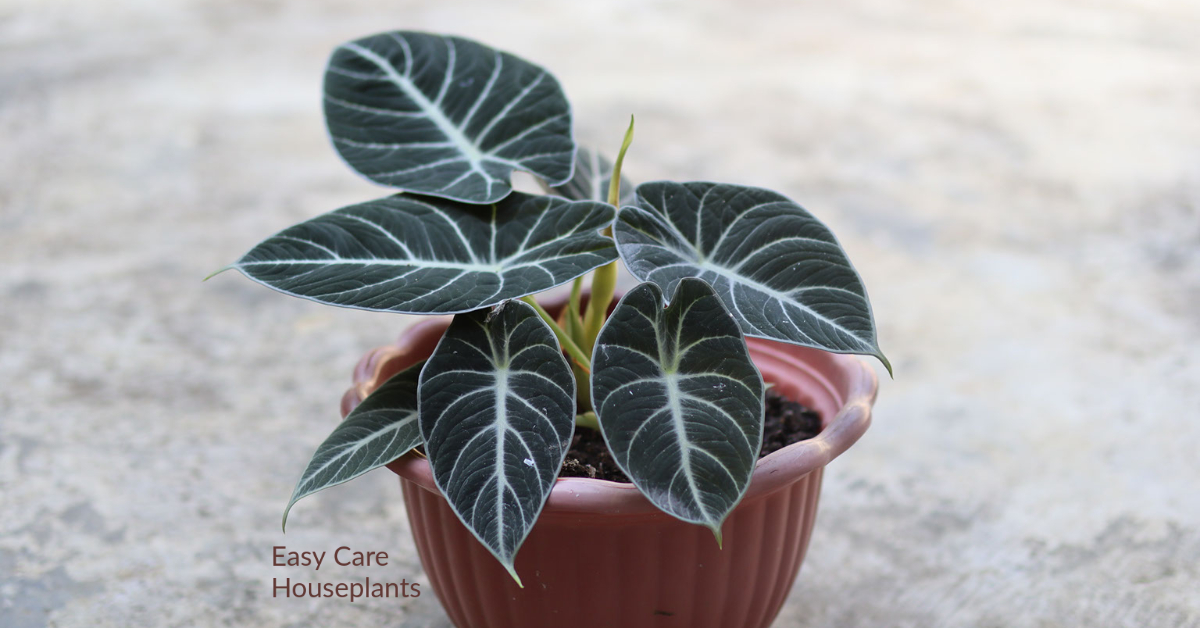
Alocasia plants run the gamut in size and color, so if you want a monstrous Corazon, a dainty Tiny Dancer, or a prehistoric-looking Mask — then you’re in luck. Native to eastern Australia and tropical and subtropical Asia, Alocasias are easy to grow, although they are particular when it comes to humidity. Overall, Alocasia care is easy, and these stylish plants make a stunning statement in a home.
Types of Alocasia
Broad arrow- or heart-shaped leaves have a pronounced midrib and are held up by tall, sturdy stems. Depending on the cultivar, some Alocasias have solid color leaves while others have variegated foliage.
Most plants grow several feet high, although some can reach 15 feet in their native habitats. There are some smaller varieties, like the Tiny Dancer hybrid that stands about 20 inches tall. Some of the more common varieties of Alocasia include:
- Jewel (Alocasia reversa)
- melo (Alocasia Rugosa)
- Black Magic (Alocasia infernalis)
- Black Velvet (Alocasia reginula)
- Brina (Alocasia zebrina)
- Corazon (Alocasia heterophylla)
- Dragon Scale (Alocasia bagindas)
- Giant Taro (Alocasia macrorrhizos)
- Green Velvet (Alocasia micholitziana frydek)
- Mask (Alocasia sanderiana)
- Pink Passion (Alocasia brancifolia)
- Polly (Alocasia amazonica)
- Purple Umbrella (Alocasia wentii)
- Silver Dragon (Alocasia baginda)
- Tiny Dancer (Alocasia brisbanensis×Alocasia odora)

Elephant Ears
Some Alocasia cultivars have such large leaves that they’re known as Elephant Ears because of their size. The Elephant Ears nickname is also used to describe plants in the Colocasia genus. Alocasia and Colocasia have a similar look and are both members of the Araceae family, making them related to Monstera, Philodendron, and Syngonium.
Alocasia Light Requirements
Place these leafy plants in bright indirect sunlight to provide proper Alocasia care. Some Alocasia plants can handle direct light, but direct light can damage others. Be careful and move your plant out of direct light if the foliage burns. Plenty of sunlight is necessary for plants with variegated foliage, and the colors may fade or appear muted if the light levels are too low.
How Often to Water Alocasia
Alocasias have increased water needs. These plants like lots of water, but they don’t like to be soggy, so wait until the top couple of inches of soil dries out before giving water. Feel the soil to determine the right time to water. Cut back watering in the winter when the plant is dormant.

Best Soil for Alocasia
Most potting mixes are good, but elevate your Alocasia care with slightly acidic soil. Soil mixes containing peat will tip the pH in the right direction. Drainage is important because these plants do not like overly damp conditions.
Temperature for Alocasia
Warm conditions are a must for proper Alocasia care. Keep these plants between 65° and 85° F, which is easy in most homes. Temperatures below 60° F can be damaging. Move your Alocasia to an outdoor space in the summer and your plant will love it. The heat and humidity of summer will support rapid growth and allow your plant to thrive.
Alocasia Humidity
High humidity is essential to proper Alocasia care. Humidity around 70% is preferred, but these leafy plants can comfortably live in 60% humidity. Dryness along the edges of the leaves indicates the air is too dry. Increase the humidity if you see signs of damage or your home is prone to dry air.
Alocasia Fertilizer
Most plants benefit from fertilization, but fast-growing plants need extra help to maintain their rapid pace. Take your Alocasia care to the next level with routine applications of fertilizer during the spring and summer. Use a balanced, water-soluble fertilizer applied every two or four weeks. Do not fertilizer dormant plants.

Do Alocasias Bloom?
Yes, Alocasias bloom. Only well cared for plants bloom, so ensure your Alocasia care is on point if you want the plant to set flowers. The spathe and spadix blooms are perched ontop of tall stems that emerge from the center of the plant.
Pruning Alocasia
Pruning is not a big part of Alocasia care. Remove dead or damaged growth as needed. Try to time pruning to when the plant is actively growing. Use clean, sharp shears to prune and be careful, because the plant produces a sap when cut. The sap can cause skin irritation, so consider wearing gloves. Clean the shears when you’re done pruning to remove any residue.
When to Repot Alocasia
Alocasia are fast-growing plants, so they can quickly outgrow their pot. Fortunately, Alocasia are also content being slightly root bound. Plan to repot Alocasia every two years, or sooner if you notice roots through the drainage holes or slowed grwoth.
Alocasia Propagation
Propagate Alocasia by division. This plant has rhizomes, which are thick, tuber-like roots. The plant naturally sends out new growth via its rhizomes. Dividing is best done when repotting. Gently remove soil and work the roots apart. You may need to cut the roots if they cannot be untangled. Repot each plant in a container with drainage that is one to two inches larger than the root ball.

Is Alocasia Pet Friendly?
Alocasias are not pet-friendly, so be careful introducing this plant into your home if you have pets. All parts of the Alocasia plant are poisonous to cats and dogs. The large foliage may be enticing to curious pets, and the size of the plants makes it difficult to move the plant to a high shelf or inaccessible area.
Alocasia Styling Tips
Alocasias are statement-making houseplants with an impressive presence, so they make plant styling easy. Research your cultivar to determine how big it will grow, and make sure you have the space for such a large plant. These plants are fast-growers with proper Alocasia care, so the tiny plant you bring home will quickly become a behemoth.
Display your Alocasia in a concrete planter to create a minimalist contrast against the foliage, or use a woven basket as a cachepot to add even more texture.
Alocasia Care Tips
Humidity is critical for Alocasia care, but once you get that under control, these large, leafy plants are easy to maintain. The stunning dramatic foliage makes these plants an easy focal point that introduces effortless style. Alocasias are excellent plants whether you are new to plants or a seasoned pro.