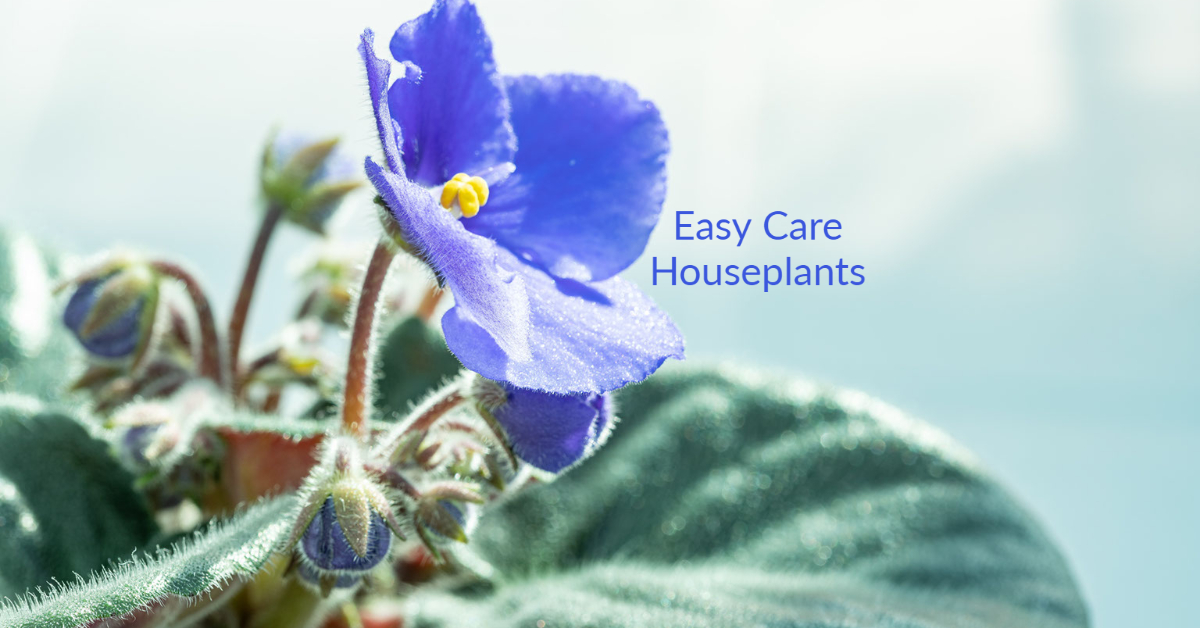
African Violets are classic houseplants often overshadowed by trendier plants, and that’s a shame. There is plenty of shelf space for all the greenery, and it’s time to make room for these beauties. This plant is for you if you’re into texture and flowers but still want something low-key. African Violets have an undeserved reputation for being difficult, but that’s just not the case. These plants do not require anything special but need a certain level of care to thrive. Learn about African Violet care so you can introduce these lovelies into your collection.
Types of African Violet
African Violets are low-growing plants. The foliage has a fuzzy, velvet-like texture. Some varieties have flat leaves, others have ruffled foliage, and the leaves can be solid green or feature silvery-white variegation. The vegetation grows in a rosette form, with flowers growing in the center of the foliage. The dainty flowers can be purple, blue, red, or white, featuring single, semi-double, or double blooms. Mature plants reach 6 to 12 inches tall and wide, depending on the variety.
This plant is harboring a secret: it’s not a violet. For what it’s worth, the flowers resemble the blooms of a violet (violets belong to the genus Viola). African Violets are formally known as Saintpaulia ionantha. This plant hails from eastern Africa, specifically the tropical rainforests of Tanzania and Kenya. Some of the most popular African Violet varieties include:
- Amethyst African Violet
- Champagne Pink African Violet
- Cherry Princess African Violet
- Hawaiian Pearl African Violet
- Julia African Violet
- Little Intermezzo African Violet
- Little Maya African Violet
- Lonestar Snowstorm African Violet
- Lyon’s Lavender Magic African Violet
- Myakka Trail African Violet
- Persian Prince African Violet
- Rambling Moonbeam African Violet
- Summer Twilight African Violet
- Zephyr African Violet

Bloom Schedule
Individual flowers often last for two to three weeks, but the plant will continue to push out new flower buds for a continuous floral display. With proper African Violet care, the plant will bloom for most, if not all, of the year.
Similar Plants
The closely related Streptocarpus species features a variety of blooming houseplants and some stunning hybrids. These plants have similar care needs as African Violets and feature a wide array of flower colors. If blooming houseplants are your thing, then Streptocarpus is worth checking out.
Gloxinia is a lovely flowering houseplant that looks strikingly similar to African Violets but is unrelated. These Sinningia speciosa hybrids also have almost identical care to African Violets.
African Violet Light Needs
Bright indirect sunlight is necessary for African Violet care. Direct light is trouble and will burn the lovely foliage. A south-facing window is a good spot but routinely inspect the foliage. Washed-out colors indicate too much light, while black or brown singe marks result from sunburn. Hang sheer curtains or move the plant back if you see sun damage. Leggy growth or thin foliage are signs of not enough sunlight.
How Often to Water African Violet
Balancing moisture is the hardest part of African Violet care. These plants like dampness, but they strongly dislike wet conditions. Water African Violets when the soil is slightly damp and almost dry. The leaves will droop and fall off if the plant is overwatered. Underwatered plants will develop yellow or brown leaves that then shrivel and wilt.
African Violets require a special watering technique to quench the plant’s thirst without damaging the foliage. The velvety leaves of the African Violet must be kept dry. Brown spots form on the leaves if they get wet, and this can cause the foliage to wilt. Keeping the foliage dry is essential. Watering the plant from the top of the soil is a high risk because the leaves may get wet. Some plant owners push the spout of the watering can into the soil to protect the leaves. The easy solution to preserve the foliage is to bottom water African Violets.

Bottom Water Method
Bottom watering is a method that can be used for all plants, but it is especially helpful for African Violet care. Fill a sink or bowl with an inch or two of water and place the African Violet, pot, and all, in the water. The soil will absorb water through the drainage holes and soak up the moisture it needs without damaging the foliage. Let the plant soak for 15 to 20 minutes.
Specialty Pot
There are specialty self-watering pots designed for the African Violet. Place the plant directly in an inner, unglazed ceramic pot that fits inside a glazed outer pot. Fill the outer pot with one to two inches of water or up to the water level indicator if the pot features such a mark. Place the inner pot in the outer pot, and the water will slowly seep through the unglazed inner pot, watering the plant. This dual pot design is effective for African Violets because it provides consistent moisture while protecting the foliage.
Check the soil dampness weekly by placing your finger in the soil. Add more water to the outer pot if the top half inch of the potting mix is dry. Sunlight and humidity impact how often the plant needs water, but plan to water your African Violet weekly during the growing season.
Best Soil for African Violet
Overly wet conditions and standing water are fatal for African Violets, so well-draining soil is a must. These plants are susceptible to root rot and quickly decline if they sit in waterlogged soil. The leaves will rapidly deteriorate and fall off if the conditions are too wet. Drainage is vital, but slightly acidic to neutral soil supports growth and provides excellent African Violet care.
Temperature Needs
Most homes are a comfortable temperature for African Violets; anything between 65° and 80° F is suitable. Cold temperatures are trouble, so be careful if moving your plant outside during the summer. Temperatures below 60° F harm the foliage.

Easy Breezy
Temperature fluctuations are bad for African Violets, but a slight breeze can be beneficial. Good air circulation will dry out the soil and reduce the risk of mold. Place the plant in a high-traffic area, like a central hallway or a busy room, like a kitchen or living room. The air will naturally flow as you move about, and this will be good for the plant. Avoid placing this plant in a guest room or a space you do not frequent daily.
African Violet Humidity
The velvety foliage of African Violet plants thrives with increased dampness in the air. Humidity of about 80% is perfect, so place this plant in a damp room like a kitchen or bathroom, as long as the space also provides adequate sunlight and airflow.
Increase the humidity if necessary to provide excellent African Violet care. Position a humidifier to avoid misting the plant directly if applicable. Some plant owners mist their African Violets to increase dampness, but this can be risky because water droplets can damage the leaves.
African Violet Fertilizer
African Violets are slow-growing, but routine doses of fertilizer will help them grow full and leafy. Use a plant food intended for African Violets or a balanced fertilizer with numbers like 10-10-10, or a product with increased phosphorus, like 15-20-15. Apply fertilizer every two weeks during the spring and summer and give the plant a break during the fall and winter.
Pruning African Violet
Remove leaves with any marks or signs of damage and pinch back flowers as soon as they fade. Removing dead or dying growth redirects energy back into the plant, so you’ll ultimately end up with a large and full plant.
When to Repot African Violet
African Violets prefer to be rootbound, but a new, larger container is occasionally necessary. Roots growing above the soil, slowed growth, and leaf loss are common signs the plant is ready for an upgrade. Select a slightly larger pot and use moist, well-drained soil. Crowded plants that feature several offshoots may be able to return to the same container after the offshoots are removed. Always be careful handling roots, and be extra careful when handling African Violet roots.

African Violet Propagation
Create more lovely flowering African Violet plants through propagation. Offsets or leaf cuttings are effective methods to propagate African Violets. Offsets are tiny plants that grow alongside the parent plant. Remove these tiny plants when they are about one inch large. It’s often easiest to remove offsets when repotting.
Take leaf cuttings from the bottom and cut the end at a 45° angle. Place the cutting in well-drained soil, tent the container with plastic, and place the container in bright, indirect sunlight. New plants will grow from the cut stem in about three months. Separate the new plants from the cutting when they are at least one inch in size.
Is African Violet Pet Friendly?
African Violets are safe to have in households with pets. These plants are non-toxic to dogs and cats. The foliage and flowers are not likely to encourage a playful pet but know that your pet will be okay if they nibble on the leaves or flowers.
African Violet Styling Tips
African Violets have a low profile and grow in a rosette formation, so give this stunner a decorative container because it will be visible. Use a plain container so as to not distract from the foliage and flowers, or go for something bold to complement the vegetation.
African Violet Care Tips
Growing a happy and healthy African Violet requires trial and error. It is normal to experience setbacks, but you’ll learn and move forward. Once you understand what the plant wants and needs, you’ll get into a routine, and your plant will grow large and lush.