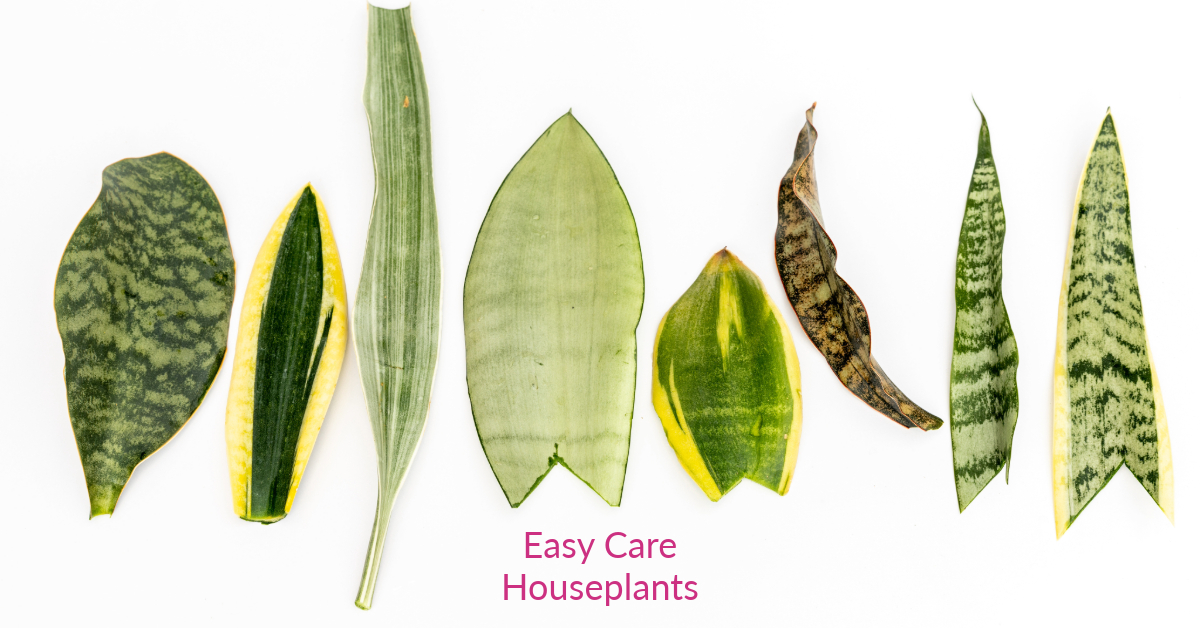
Snake Plants are some of the most easy-care houseplants out there, so it makes sense that once you have one, you’ll want to propagate it to have more. It’s easy to propagate Snake Plants, but it takes time, especially when compared to other houseplants like Pothos or Tradescantia. You have choices when it comes to deciding how to propagate Snake Plants. Learn more about each option and pick up some tips to successfully propagate your Sansevieria.
Division Propagation
Let’s start with an easy propagation method because, honestly, the plant does most of the work. A happy and healthy plant will outgrow its pot and become rootbound. When dealing with a crowded Snake Plant, you have two choices: repot it in a slightly larger pot or divide it into the same size or smaller pots.
Divide a Snake Plant by gently removing it from its pot. Knock loose potting soil free and untangle the roots. You want to remove enough soil to see the roots well enough to separate the plant. It’s not necessary to remove all of the soil. You may need to use pruning shears or a knife to cut the roots if they are connected. Always use clean, sharp pruning shears.
Each plant should consist of at least a few leaves and have several roots that measure a couple of inches long. The size of the initial plant determines how many new plants you end up with, so you may get a single new plant or a few.

Preferred Method for Variegated Cultivars
Division is a good choice for propagating variegated Snake Plants. Sansevieria plants propagated through division will maintain their variegation, while Snake Plants propagated through other techniques may lose their coloration. You can still expand your plant collection and establish new Sansevierias, but the foliage may revert to a single color.
Post Division Snake Plant Care
Repot each new Snake Plant in a pot that measures one to two inches larger than the root ball. Avoid going much bigger because the plant will direct all of its energy into root growth at the expense of foliage growth. A recently divided plant needs the same level of care as an established plant and does not need anything special. Although it’s worth noting that Sansevierias can handle diverse amounts of light, but a new plant will do best with bright, indirect sunlight. Repotting and dividing can be stressful; plenty of sunlight will help ease the transition and eliminate the stress of repotting and dividing.
Propagating Snake Plants Via Leaf Cuttings
Propagation through cuttings is an easy and effective method for most houseplants, including Sansevieria. You’ll need to trim a leaf from the parent plant. Depending on the size of that leaf, you may want to cut it into smaller pieces. Place the cut end in water or soil. Roots will grow from the cut end in a few weeks, and a new plant will eventually appear. Make the initial cut close to the soil. The parent plant will not regrow where it is cut, so it’s best to use as much of that leaf as possible to propagate. Cutting close to the soil also maintains a tidy appearance for the parent plant.
It’s not necessary, but for flat-leaf Sansevieria, like the Black Gold Snake Plant or Jaboa Snake Plant, trim a notch or upside-down V shape into the bottom if you have a big enough cutting. You can propagate cuttings with a straight cut, but the V-shape increases the surface area where roots can grow, increasing the odds of the cutting setting roots.
Let the cut end dry out or callous over before placing the cutting in water or soil. It generally takes two to three days for the end to become dry. The cutting will not set roots if the end is not calloused. Instead, the cutting will rot and become soft and mushy, and you won’t end up with a new plant.
Pro tip: Maintain the orientation of the cutting when propagating Snake Plants. Each cutting should be at least two to three inches long, so if you trim one large leaf into several smaller cuttings, keep the upper part facing up and the lower part facing down. Roots will only grow from the bottom of the cutting, so if you accidentally flip the cutting upside down, it won’t grow roots.

Water Propagating Sansevieria
Once you have Snake Plant cuttings with a calloused edge, place that end in a cup or vessel of water. The bottom inch of the cutting should be submerged. Give the cutting fresh water once per week. Place the cuttings in bright, indirect sunlight. Avoid overcrowding, but you can propagate several Sansevieria cuttings in the same container simultaneously.
Roots often appear in six to eight weeks. Transfer the cuttings to a small container with well-draining potting soil when the roots measure at least one inch long. Place the new plant in bright, indirect sunlight and keep the potting mix damp but not soggy for the first week. Afterward, transition to the same type of care necessary for an established potted Snake Plant.
Water propagating Snake Plants is easy. The best part, especially if you’re new to propagating houseplants, is that you can see the roots when they first emerge. Seeing the roots confirms that the entire process is working and that you’re doing it right, which is nice if you haven’t done this before.
The only disadvantage of propagating Snake Plants via cuttings rooted in water is that it’s time-consuming. Don’t try this method if you’re impatient. Rooting a Sansevieria cutting in water is a long game.
Soil Propagating Snake Plants
You can skip the water and propagate a Snake Plant cutting with a dried end directly in potting soil. Use well-drained soil intended for cacti or succulents. Locate the potted cutting in a sunny spot. Keep the soil damp but not waterlogged. Established plants like to dry out before getting water, but cuttings need slight moisture to grow roots.
Soil-propagated Snake Plant cuttings should start to grow roots in about six weeks, and in a few more weeks, the cutting should be able to handle regular Sansevieria care. You can test the cutting for roots by gently pulling on the leaf. If you feel no resistance, the cutting does not have established roots, while if the plant is secured in the soil, you know it has roots.
With time, a new Snake Plant will grow from the cutting’s roots and emerge at the soil line. Once the new plant takes off, the cutting will die back. Use clean, sharp shears to remove the cutting when the new baby plant is at least one to two inches tall.

Remove Pups Via Rhizom Cuttings
Healthy Sansevierias grow new plants along their roots or rhizomes. These tiny baby plants, known as pups, pop up alongside the parent plant and become full-fledged plants with time. If you let these pups continue to grow, the plant will become crowded or rootbound, and a bigger pot or division will be in order. You can proactively remove pups if you choose. Removing pups to propagate Snake Plants is a cross between division and cuttings.
Let a new, tiny plant reach at least one to two inches in height before removing it. Push away the soil to expose the roots, also known as rhizomes. Make an incision using a clean, sharp knife or pruning shears to remove the pup. Get part of the rhizome, often lighter in color than the leaf, to increase the odds of the pup growing roots. Let the cut end callous over and pot the pup in well-draining soil after a few days. Place the newly planted Snake Plant pup in a location with bright, indirect sunlight. Keep the soil damp for the first few weeks. The pup should form a root system in about six weeks.
Removing a pup lets you start growing new plants without waiting until the parent plant is a candidate for division. It’s a matter of preference, and you can choose whether or not to remove Snake Plant pups.
Propagate Snake Plants
All methods of propagating Snake Plants are easy, so you can’t make a bad choice. Consider your plant and the specific situation to determine if division, leaf cuttings, or rhizome cuttings are best. Be patient, and you’ll have a brand new Snake Plant before you know it!