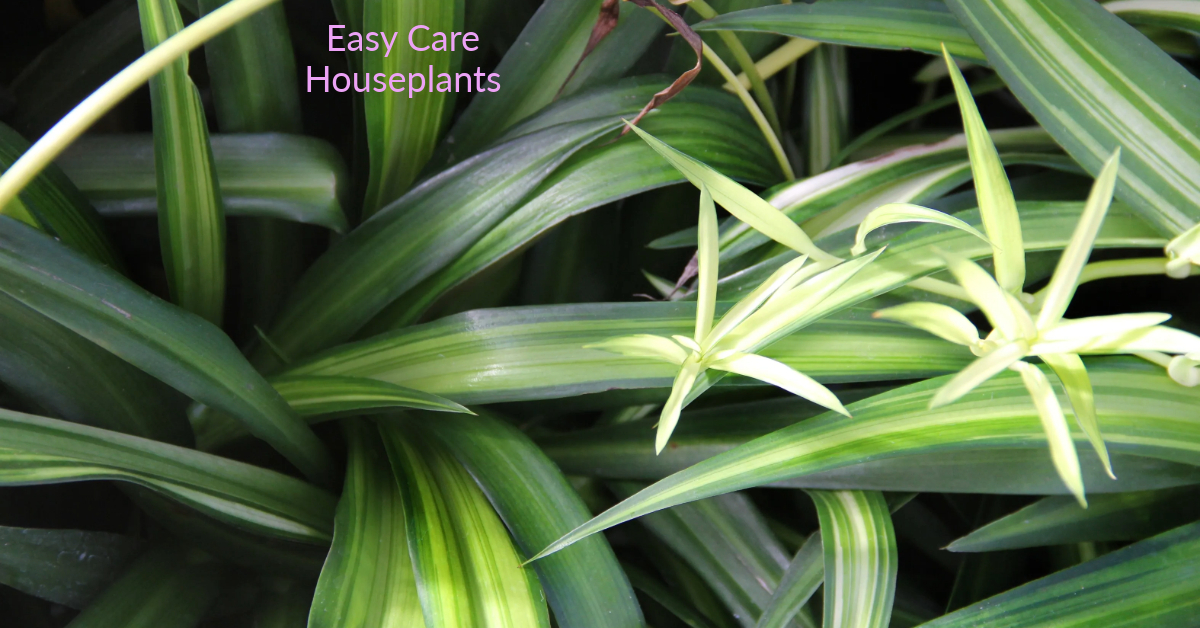
Enjoy the easy care requirements of a spider plant mixed with stunning variegation thanks to the Hawaiian spider plant. Lance-shaped foliage grows in a rosette and gently arches, providing leafy dimension. Whether you’re new to houseplants, not so sure about spider plant care, or looking for something unique and different, this leafy charmer is for you. Find out what sets the Hawaiian spider plant apart from other varieties and how to care for this plant.
Aliases and Origins
From a botanical standpoint, this plant is a Chlorophytum comosum ‘Hawaiian.’ This beauty also goes by the name Golden Glow spider plant and may be labeled as a Hawaiian Golden Glow spider plant. Despite the name, this plant is not from Hawaii. The Hawaiian spider plant is a variety of Chlorophytum comosum, which hails from tropical regions of Africa.
I have yet to uncover why this cultivar is known as a Hawaiian or its connection to the Islands. There are plenty of unsubstantiated claims that this plant is from Hawaii. There are lots of reputable sources that indicate the Chlorophytum comosum is from Africa. I have put in a lot of research, and I’ll update this article if I ever get an answer.

What Makes the Hawaiian Spider Plant Different?
The leaves of the Hawaiian are still narrow but slightly wider than many other spider plant varieties. A creamy white stripe runs down the center of each narrow leaf; the variegation may appear yellow on some plants. The colors are similar to those of the Vittatum spider plant, but the Vittatum maintains the same coloration throughout its entire lifecycle. The margins of the Hawaiian are light green but gradually fade to dark green with age. The color-changing variegation pattern sets the Hawaiian variety apart from other spider plants.
Hawaiian Spider Plant Care
Spider plant care is generally consistent across all varieties, including the Hawaiian. Bright, indirect sunlight is necessary for the variegation to shift and for mature plants to retain the intensity of the dark green. While this plant can live in medium light, be aware that the variegation change may take longer, and the green may not be as dark as a plant in bright sunlight.
Know the Signs
Spider plants are good at letting you know if something isn’t right, but you’ll need to investigate to figure out the exact issue. Brown spider plant leaves occur when a plant is over- or under-watered. An over-watered plant may have a thin yellow line separating the healthy leaf from the dead brown section. An under-watered plant will have an entirely brown leaf. Yellow leaves or washed-out variegation on a spider plant happen when the plant doesn’t receive enough light or receives too much light. Foliage that has turned yellow will ultimately turn brown and die.
Yellow and brown spider plant leaves can also happen if the plant is improperly fertilized. Foliage can die if the plant is extremely rootbound. Check the dampness or dryness of the soil, observe the light, review your fertilizing routine, and check to see how tight the plant fits in the pot if you notice unhealthy leaves.

Propagating Spider Plants
Mature plants bloom and produce offshoots known as plantlets. The Hawaiian Spider Plant’s white star-shaped flowers look the same as other cultivars, so nothing is different there. A spider plant covered in plantlets is always stunning, but the Hawaiian takes things to a new level. The foliage has transitioned to dark green by the time a Hawaiian plant can produce plantlets, but the plantlets themselves are young, so the leaves are light green. The contrast between the parent plant and the plantlets is stunning. The dark green foliage is lovely, and just when you start to forget what the plant used to look like, it reminds you.
Hawaiian Spider Plant Styling
The Hawaiian Chlorophytum comosum isn’t easy or hard to find. It may turn up at a big box store or grocery store. Be patient and check a local plant store if you want to add this leafy plant to your collection. Suspend this plant in a macrame hanger or position it on a pedestal table to admire the arching foliage. The Hawaiian spider plant is lovely on its own but feature it alongside other spider plant varieties for a cohesive and subtly different look.