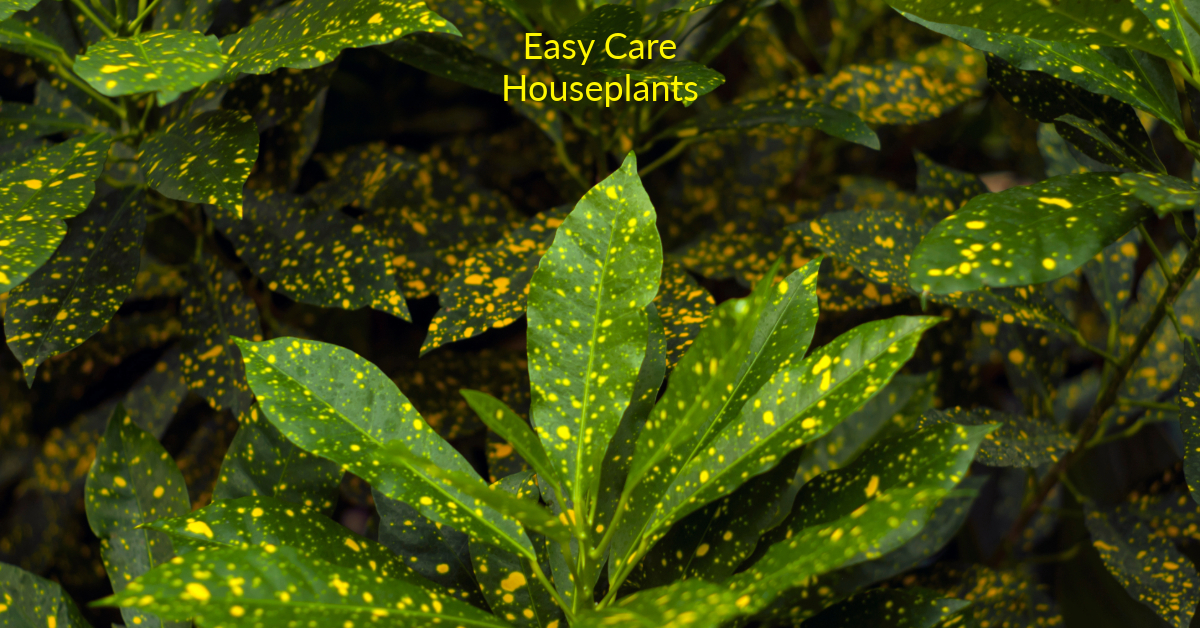
The Gold Dust Croton is perfect for adding a bold burst of color to a space without taking up a lot of your time. It is also incredibly easy to maintain and looks amazing. Learn how to care for a Gold Dust Croton and why you should consider adding one to your collection.
Rock On, Gold Dust Croton
This plant is formally known as Codiaeum variegatum ‘aureo-maculatum,’ and hails from the rainforests of Southeast Asia and the Pacific Islands. The upright, tree-like growth habit features a central leader and upright branches covered in lanceolate leaves. You may see this plant growing as a perennial in subtropical landscapes. Given the right environment and care, landscape plants can reach several feet tall. Crotons are more often seen as houseplants and top out around 12 inches.
The variegation is the standout feature of this plant. It looks as if someone dropped a can of sunny yellow paint near the plant, splattering the medium-green foliage. Leaves can be primarily green with slight variegation or almost entirely yellow. The yellow spots appear random, and there is no consistent pattern. The bright and cheery hue makes this Croton a dazzling addition to a home or office.
Gold Dust Croton Light Needs
Bright, indirect sunlight is necessary for proper Gold Dust Croton care, especially if you want to maximize the variegation. Crotons can handle medium sunlight but expect more green and less yellow in low-light environments.
Crotons have a reputation for being able to handle direct sunlight. While this is true, be careful. Most houseplants are not acclimated to direct sunlight, and too much will burn the foliage. The plant may lose its ability to handle direct sunlight during the winter, when sunlight is less available, so re-acclimation may be necessary.
The best thing for your plant may be to err on the side of caution and leave it close to, but not directly in, a south-facing window. An east- or west-facing window will also receive plenty of sunlight.
Water Requirements for Gold Dust Croton
Crotons like dampness, so water when the top layer of the potting soil is dry. The ideal time to water is when the soil is partially wet. Use a well-drained mix that allows excess water to drain and remove runoff from the tray or cachepot right away. These plants can fall victim to root rot, so avoid overwatering.

Temperature and Humidity for Codiaeum variegatum
Croton plants are generally laid-back but can get particular about temperature and humidity. They dislike temperature fluctuations, so keep them clear of drafty windows, too close to an exterior door, and away from heating or cooling vents. A blast of chilly air can result in leaf drop. Normal household temperatures are entirely acceptable, but sudden temperature changes are an issue.
Aim for humidity in the 40-60 percent range. Dry air leads to crispy foliage and, ultimately, leaf drop. To keep the foliage lush and vibrant, group your Croton with other plants, use a pebble tray or a humidifier.
Gold Dust Croton Fertilizer
A monthly dose of plant food during the growing season is a great way to keep the plant happy and thriving. Use a balanced, water-soluble product diluted to half-strength.
Pruning Gold Dust Croton
Trim dead or damaged growth as needed. You can cut back leggy overgrowth to maintain a compact and bushy form. Healthy growth removed to maintain the shape can be propagated to create a new plant. Growth nodes appear right above where the leaf stem joins the branch.
When to Repot Croton Houseplants
Unless you notice signs of the plant being rootbound, plan to repot your Gold Dust Croton every other year. Upgrade to a slightly larger container and give the plant fresh potting mix to encourage new growth.
Is Gold Dust Croton Pet Friendly?
The only real drawback to the Codiaeum variegatum is that it’s toxic to humans and pets. This looker is not a good choice for homes with nosey little ones or pets.